Why Shot Hardness Matters: Understanding Antimony in Premium Target Loads


- What Is Antimony, and Why Is It Added to Lead Shot?
- What Happens to Shot When You Pull the Trigger?
- Round Pellets Fly Better
- More Antimony Generally Means Harder Shot
- The B&P Approach: Sporting, Competition One and Mach
- Why Hard Shot Becomes More Important as Targets Get Longer
- Harder Isn't Automatically Better for Every Target
- Shot Hardness Is Only Part of Pattern Quality
- Does Harder Shot Break Targets Harder?
- Why You Should Still Visit the Patterning Board
- What Are You Really Paying for in Premium Target Ammunition?
- The Bottom Line on Antimony and Shot Hardness
When shooters compare boxes of target ammunition, they usually notice shot size, payload weight, and velocity first. A box might contain 1 ounce of #8 shot traveling at 1,250 feet per second, and those numbers tell you how the load was designed. But they don't tell you everything about how that load may perform when the target is 40 yards away.
One specification that rarely receives the same attention is shot hardness. Two loads with the same weight of #7½ shot and the same velocity can use lead pellets with very different physical properties. One of the primary ingredients responsible for that difference is antimony, and understanding what it does helps explain why the shot itself is such an important component of premium target ammunition.
What Is Antimony, and Why Is It Added to Lead Shot?
Lead is naturally dense, which is one reason it has performed so well as a shotshell pellet material for generations. But relatively pure lead is also soft, and softness isn't necessarily desirable when hundreds of pellets are subjected to the violent acceleration of a fired shotshell.
To make lead shot harder, manufacturers alloy the lead with antimony, a metalloid that significantly increases the hardness of the finished pellet. As the antimony percentage increases, the lead generally becomes harder and more resistant to deformation.
Target shot can therefore range from relatively soft, low-antimony lead to premium high-antimony shot engineered specifically for demanding competitive applications. Common terminology sometimes describes lower-antimony lead as "chilled" shot and higher-antimony material as "magnum" or hard shot, although those terms alone don't necessarily tell you the precise composition of the pellet.
The important point is simple: antimony helps a lead pellet remain a pellet.
DID YOU KNOW? - Antimony isn't added to make a pellet heavier. In fact, increasing the percentage of antimony slightly reduces the density of the lead alloy because antimony is less dense than lead. Its real advantage is hardness: the pellet becomes more resistant to crushing, flattening, or other distortion during the firing process.
That distinction matters because it explains why premium shot performance is about much more than raw pellet energy.

What Happens to Shot When You Pull the Trigger?
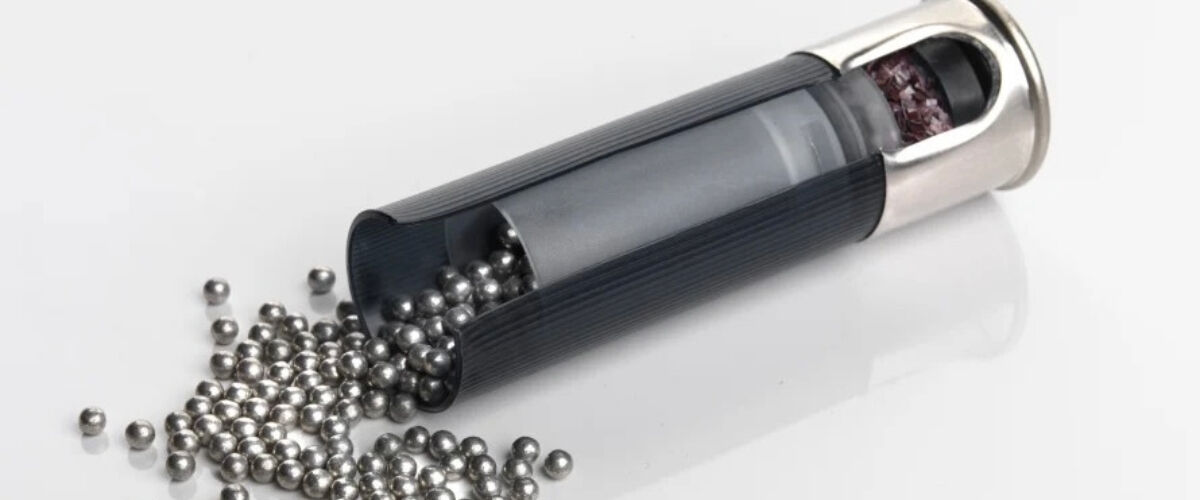
The moment a primer ignites and the propellant begins generating gas, the shot charge changes velocity dramatically over an extremely short distance. Hundreds of pellets that were sitting motionless inside the hull are accelerated to more than 1,000 feet per second before leaving a barrel only a few feet long.
During that acceleration, the pellets don't all experience exactly the same forces. Pellets toward the rear of the shot column are forced against the pellets ahead of them as the entire payload accelerates. This phenomenon is commonly called setback, and it can cause softer lead pellets to flatten or become misshapen.
The shot charge then encounters additional forces as it moves through the forcing cone, barrel, and choke. By the time the payload exits the muzzle, some softer pellets may no longer resemble the beautifully round spheres that went into the shell.
That's important because roundness matters once a pellet enters the air.
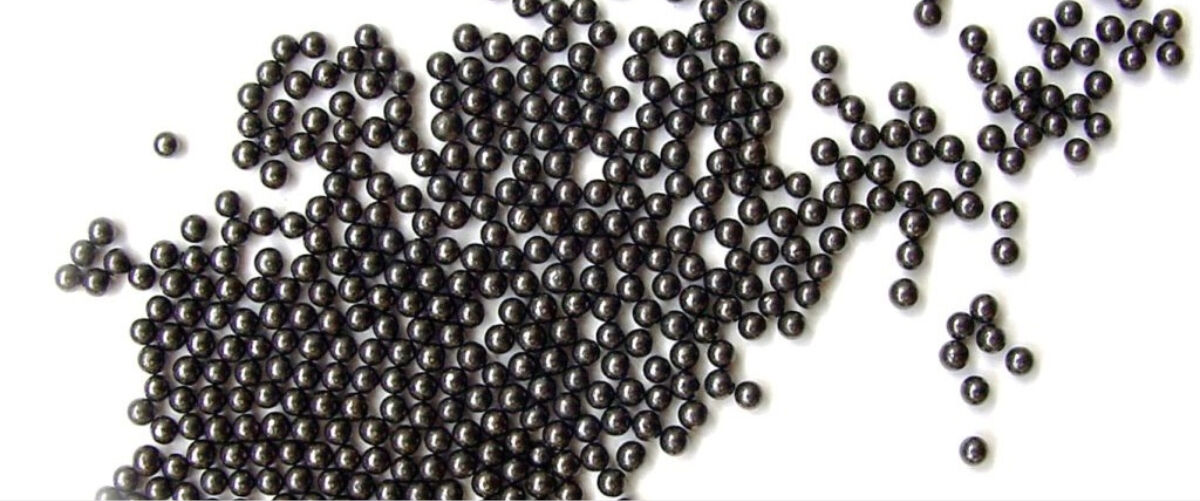
Round Pellets Fly Better
Imagine throwing a baseball and then trying to throw an irregularly shaped chunk of the same material. Even if both leave your hand at the same speed, they won't necessarily travel the same way because air interacts differently with their shapes.
Shotgun pellets follow the same basic aerodynamic principle. A spherical pellet presents a relatively predictable shape to the airflow around it, while a flattened or irregular pellet experiences uneven aerodynamic forces.
Those irregular pellets are more likely to deviate from the main shot cloud. Shooters often call these wandering pellets fliers, and enough of them can reduce pattern density and create thin areas within a pattern.
Harder shot helps reduce this problem by resisting deformation during setback and its trip through the barrel and choke. More pellets remain round, and more round pellets have the opportunity to stay within the useful portion of the pattern. That is where antimony begins translating from metallurgy into broken targets.
DID YOU KNOW? - A shotgun doesn't actually throw a perfectly flat "wall" of shot at a target. The pellets form a three-dimensional shot cloud, with some pellets arriving ahead of others. Pellet deformation, aerodynamic drag, shot size, velocity, and other load-design factors can influence how that cloud develops after it leaves the muzzle.
For the shooter, however, the objective remains straightforward: put as many predictably flying pellets as possible into the useful pattern at the distance where the target is being broken.
More Antimony Generally Means Harder Shot
As a general rule, increasing antimony content increases the hardness of lead shot. Economy ammunition may use relatively soft shot because it costs less and performs well enough for close-range targets, recreational shooting, and other applications where extreme pattern performance isn't required.
Premium competition ammunition often goes the opposite way. Harder shot costs more to manufacture, but it provides an important advantage when maintaining pellet shape becomes increasingly valuable. High-quality competition loads commonly use lead containing roughly 2% to 6% antimony, although exact percentages vary by manufacturer, shot size, and intended application.
This is particularly important with smaller target pellets such as #7½ and #8 shot. Smaller pellets can be more susceptible to deformation than larger pellets, making shot quality especially relevant in ammunition designed for demanding clay-target disciplines.
It also helps explain why two shells that appear nearly identical on the box can perform differently on the pattern board.
The B&P Approach: Sporting, Competition One and Mach
B&P's target ammunition lineup shows how shot hardness can be tailored to a shotshell's intended use rather than treated as a single specification across an entire product family.
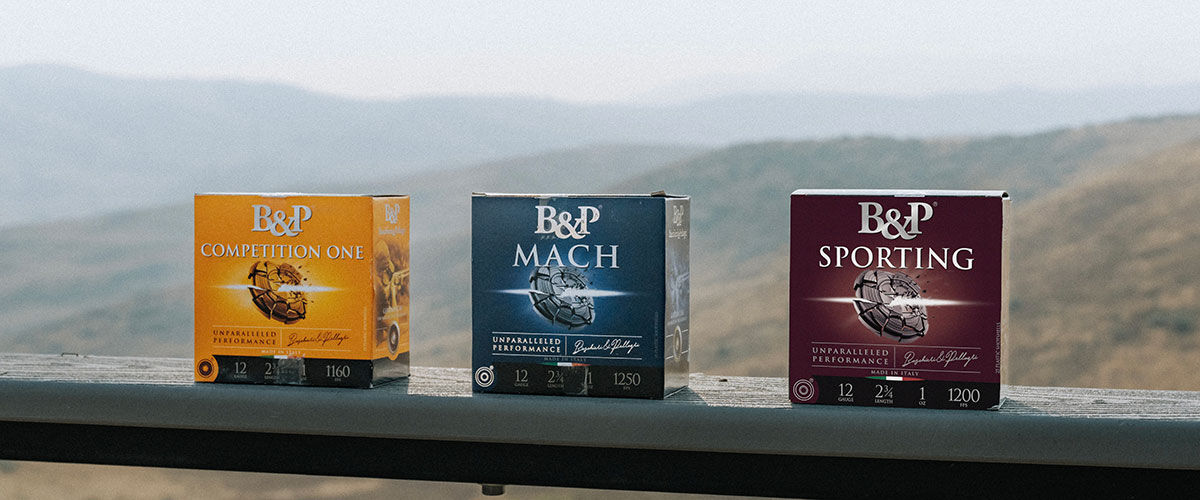
B&P Sporting uses lead shot with 2% antimony. It's designed as an accessible sporting load where reliable target performance and value are priorities. For recreational shooting, practice, and many closer target presentations, extremely hard shot simply isn't necessary to accomplish the job.
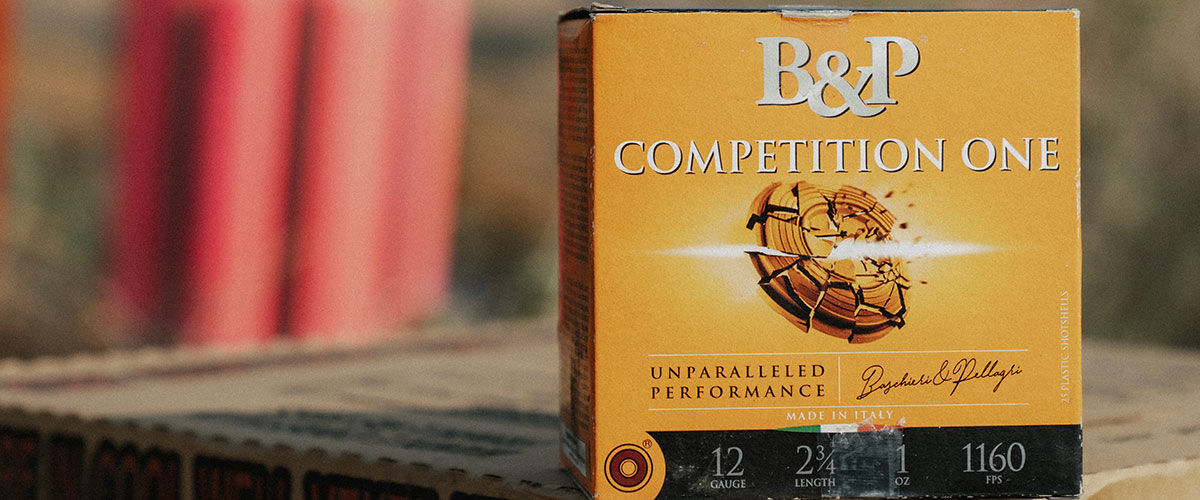
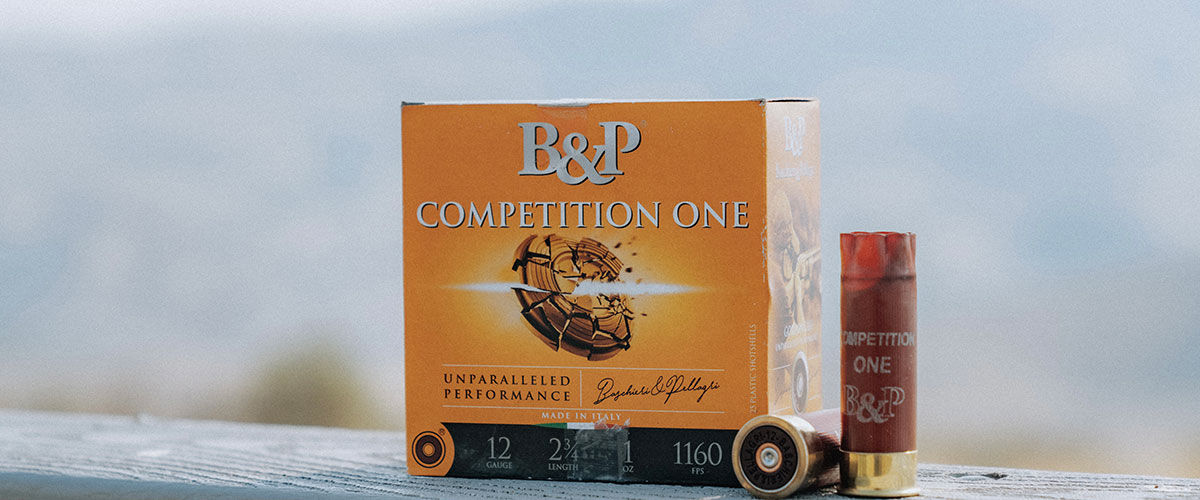
Move to B&P Competition One, and the shot contains 4% antimony. The harder pellet resists deformation during firing, helping preserve pellet roundness and pattern quality. For serious sporting-clays shooters, that additional consistency becomes increasingly valuable as presentations become more demanding.
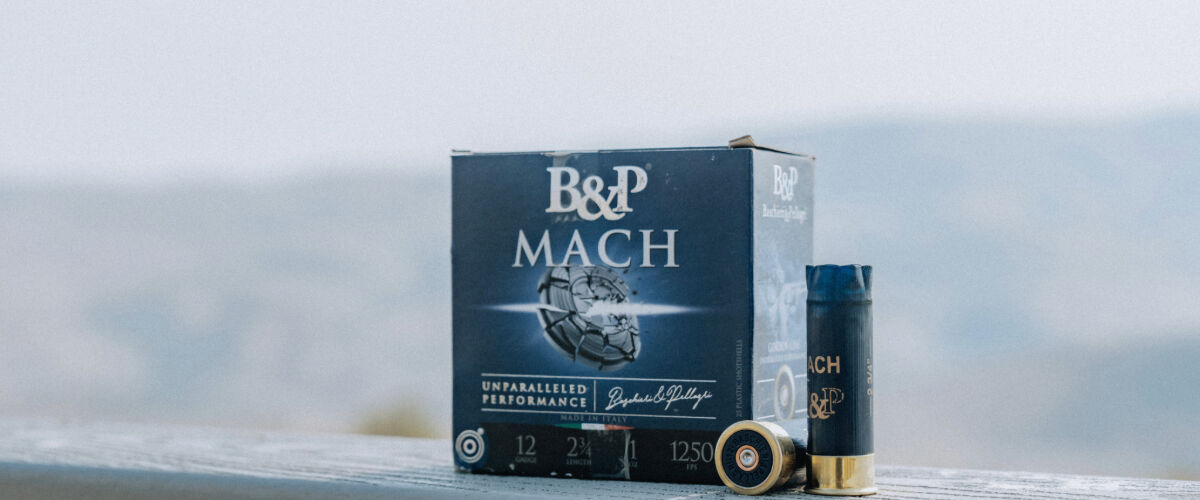
At the top end, B&P Mach uses 5% antimony shot. This harder shot is designed for competition environments where pattern performance and consistency are paramount and where a single target can separate competitors on the scorecard.
The progression from 2% to 4% to 5% antimony isn't simply a good-better-best marketing hierarchy. It represents a change in a physical characteristic of the shot itself and lets shooters choose ammunition engineered for different levels of target difficulty and competitive demand.
Why Hard Shot Becomes More Important as Targets Get Longer
At relatively short distances, there can be considerable forgiveness in a shotgun pattern. Even pellets that begin migrating toward the outside of the shot cloud may still remain within the useful portion of the pattern when the target is close.
Distance changes that equation.
As the shot cloud travels farther, small differences in pellet trajectory have more time to become large differences in pellet location. A slightly deformed pellet that begins diverging from the main pattern shortly after leaving the muzzle can be considerably farther from the pattern's core by the time the shot reaches a distant target.
That's why shot hardness matters most for long crossers, distant outgoing targets, and other presentations where pattern integrity matters at extended distances. Keeping more pellets round and flying predictably can help maintain useful pattern density farther from the muzzle.
This doesn't mean 5% antimony magically adds yardage to a shotgun's effective range. Choke, shot size, payload, velocity, wad design, and the individual shotgun still matter. It simply means that pellet quality becomes increasingly valuable as the demands placed on the pattern increase.
DID YOU KNOW? - The pellets at the bottom of a shot column can experience more setback stress than those toward the front because they're helping accelerate the mass of pellets ahead of them. This is one reason shotshell engineers think about the entire payload as a system rather than simply filling a hull with lead and powder.
The wad, powder characteristics, shot hardness, payload weight, and velocity all interact during the milliseconds between primer ignition and the shot charge leaving the muzzle.

Harder Isn't Automatically Better for Every Target
If high-antimony shot can improve pellet integrity, it might seem logical to conclude that every shotshell should simply contain the hardest shot possible. But shotshell engineering rarely works that way.
Harder shot costs more, and the benefits matter most when the shooting application demands them. A recreational shooter breaking relatively close targets may gain little practical advantage from paying for the same shot specification demanded by a competitor facing difficult presentations where every target matters.
Pattern requirements also vary dramatically by discipline and presentation. A skeet shooter engaging targets at relatively short, predictable distances may want different characteristics than a FITASC competitor facing a long, technical crosser. Even within a single round of sporting clays, one station may present a target at 20 yards, and the next may stretch considerably farther.
Premium ammunition isn't necessarily about maximizing every specification. It's about matching components to the job the shell is intended to perform.
Shot Hardness Is Only Part of Pattern Quality
Antimony is important, but it shouldn't be considered in isolation.
A premium target shell is a system. Shot hardness and roundness work alongside wad design, propellant selection, primer performance, hull construction, crimp consistency, payload weight, and velocity. Changing one component can influence how the others behave.
The shotgun adds another set of variables. Bore diameter, forcing cone geometry, and choke can all affect the shot charge before it enters free flight. That's why the same ammunition can produce somewhat different patterns from two different shotguns—or even through different choke tubes bearing the same nominal constriction.
For B&P, this systems approach matters because technologies such as the Gordon System are designed as part of the complete shotshell architecture. The goal isn't simply to create a hard pellet or a fast shell; it's to engineer the components to work together from ignition through target impact.

Does Harder Shot Break Targets Harder?
This is where terminology can become misleading.
Adding antimony does not give a pellet some mysterious increase in striking power. Because antimony is less dense than lead, increasing antimony content actually reduces pellet density slightly. If two pellets are otherwise identical in diameter, the higher-antimony pellet can therefore weigh marginally less.
The performance advantage comes from preserving pellet shape. A round pellet generally encounters more predictable aerodynamic forces than a badly deformed one, helping it maintain a more consistent trajectory and remain part of the useful shot pattern.
For clay shooters, that's the important distinction. A pellet can't break a target if aerodynamic deviation sends it several feet away from where the shooter pointed the gun. Premium shot is therefore less about making each pellet dramatically more powerful and more about increasing the quality and predictability of the entire pattern.
Why You Should Still Visit the Patterning Board
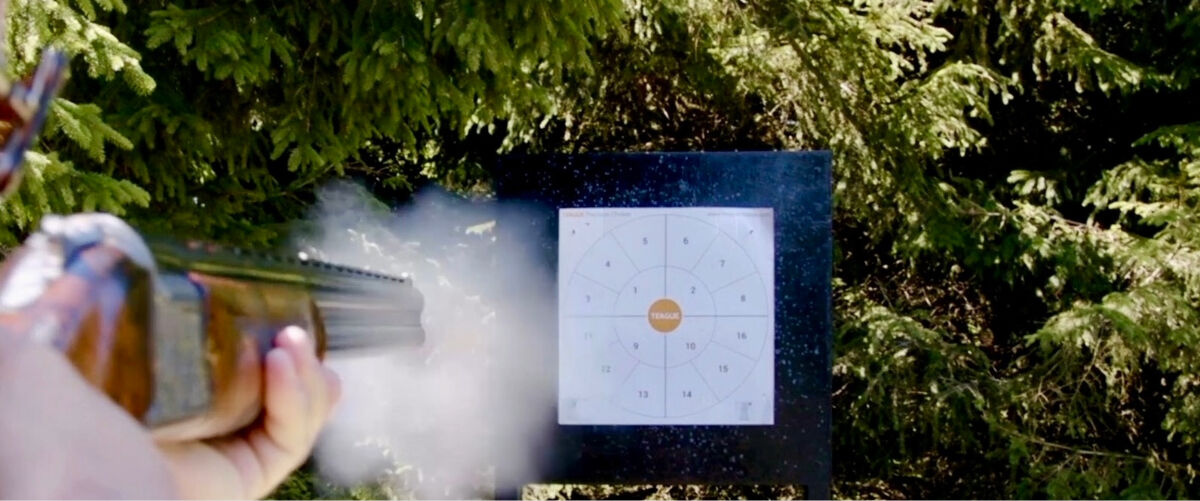
Antimony percentage can tell you something important about the quality and intended purpose of the shot, but it can't tell you exactly how a shell will pattern through your shotgun. The only way to determine that is to shoot it.
Take two loads with the same shot size and similar payload and velocity but different levels of shot hardness. Pattern each through the same shotgun and choke at several realistic target distances. Don't judge either load from a single shell; shoot multiple patterns and look for repeatable differences.
Pay attention to the center of the pattern but also examine its edges. Look for large holes, uneven pellet distribution, and obvious fliers. As distance increases, differences that weren't particularly noticeable at 20 yards may become considerably easier to see at 35 or 40 yards.
Patterning also provides something specifications can't: confidence. Knowing exactly what your gun, choke, and ammunition combination does at realistic distances removes another variable when you're standing in the station waiting for the next pair.
DID YOU KNOW? - The percentage of pellets inside a 30-inch circle has traditionally been one way shooters evaluate shotgun patterns, but percentage alone doesn't tell the entire story. Two patterns can contain the same number of pellets inside that circle while distributing them very differently.
For a clay shooter, evenness and usable density matter just as much as the raw pellet count. A pattern with a dense center but large holes elsewhere may be less forgiving than a more evenly distributed pattern containing a similar number of pellets.
What Are You Really Paying for in Premium Target Ammunition?
The difference between economy and premium ammunition isn't always obvious when you're looking at two closed boxes on a store shelf.
Both may say 12 gauge. Both may contain 1 ounce of #7½ shot. Both may list similar muzzle velocities. On paper, they can appear remarkably similar.
Inside those shells, however, component quality can differ considerably. Pellet hardness and uniformity, powder selection, wad technology, hull construction, and manufacturing tolerances all contribute to what happens after the trigger is pulled.
Antimony provides a particularly useful example because it demonstrates that not all lead shot is the same. The percentage of antimony in the alloy changes the physical properties of the pellet, which can influence how well it survives firing and ultimately how the shot charge patterns downrange.
That's one of the differences a shooter is paying for when stepping into premium target ammunition.
The Bottom Line on Antimony and Shot Hardness
For most shooters, antimony will never be as familiar a specification as velocity, payload or shot size. It isn't printed prominently on most ammunition boxes, and it's rarely the first topic discussed at the gun club.
But it matters.
Adding antimony makes lead shot harder. Harder pellets resist deformation. Pellets that remain round tend to fly more predictably, and predictable pellets help produce the dense, uniform patterns competitive shooters depend upon.
That's why understanding the progression from B&P Sporting's 2% antimony shot to Competition One's 4% and Mach's 5% tells you something meaningful about how those products were designed and where they fit within the B&P target lineup.
The lesson isn't that more antimony always means a better shell.
It's that better ammunition begins with understanding exactly what every component is being asked to do. And sometimes, one of the smallest ingredients in a shotshell can make a meaningful difference when the target is on edge, crossing fast and a long way from the muzzle.
Mach
Competition One
Sporting