What Does Shotgun Shell Velocity Really Mean?


- Why Faster Isn't Always Better—and What FPS Actually Means for Patterns, Recoil, and Downrange Performance
- What Does FPS Mean on a Box of Shotgun Shells?
- Muzzle Velocity Isn't Downrange Velocity
- Faster Loads Do Have Advantages
- Velocity and Recoil Go Hand in Hand
- Can Higher Velocity Affect Patterns?
- Pellet Hardness Becomes Part of the Velocity Conversation
- What Velocity Is Best for Sporting Clays?
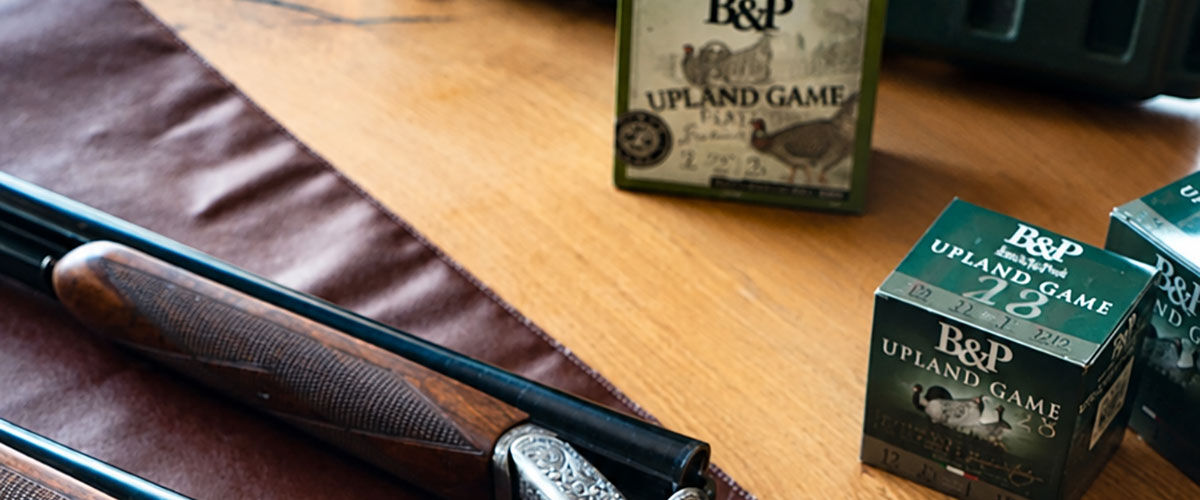
- What Velocity Is Best for Upland Hunting?
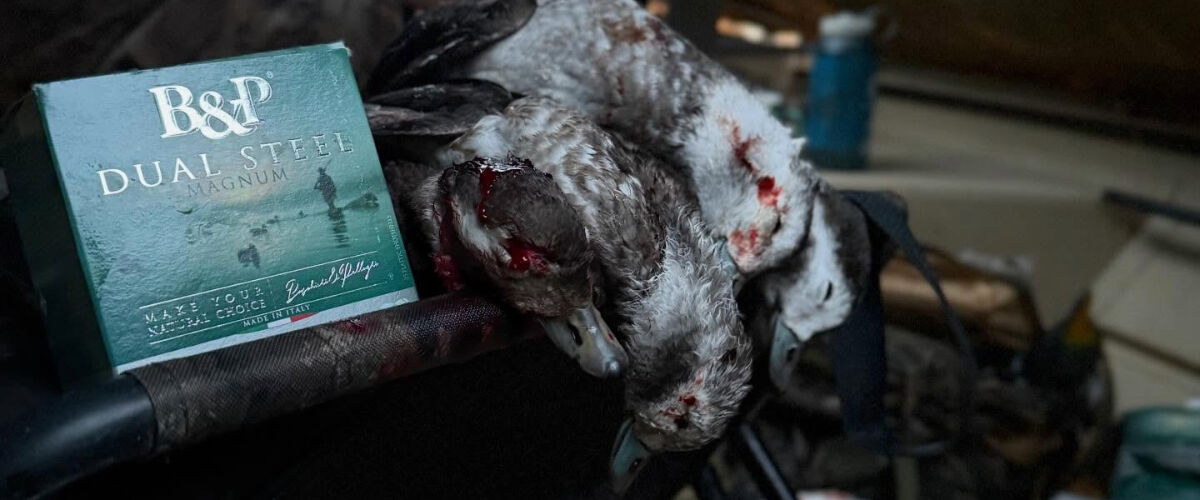
- What About Waterfowl Loads?
- Why Consistent Velocity May Matter More Than Maximum Velocity
- Don't Forget the Patterning Board
- So, Is Faster Shotgun Ammunition Better?

Why Faster Isn't Always Better—and What FPS Actually Means for Patterns, Recoil, and Downrange Performance
Pick up almost any box of shotgun ammunition, and you'll find a number that receives a lot of attention: velocity.
1,150 fps. 1,200 fps. 1,300 fps. 1,450 fps.
It's easy to assume the largest number represents the best-performing ammunition. After all, faster sounds better. More velocity should mean harder hits, shorter leads, and better performance downrange. The reality is more complicated.
Muzzle velocity is an important part of shotshell performance, but it is only one part of a much larger system. Shot size, pellet material, payload weight, pellet hardness, wad design, pattern quality, recoil, and the distance to the target all influence what happens after the trigger is pulled.
Understanding velocity—and just as importantly, understanding what velocity doesn't tell you—can help you choose better ammunition for everything from sporting clays to pheasants and waterfowl.
What Does FPS Mean on a Box of Shotgun Shells?
FPS stands for feet per second, and it describes how fast the shot charge is traveling immediately after leaving the shotgun. A shotshell listed at 1,200 fps is therefore launching its shot charge at approximately 1,200 feet per second under the manufacturer's standardized testing conditions. But there's an important distinction: the number printed on the box is essentially an initial velocity, not the speed the pellets maintain all the way to the target.
That's where shotshell ballistics become interesting.
Unlike a streamlined rifle bullet, individual shotgun pellets are small spheres. A sphere is aerodynamically inefficient, so shotgun pellets begin losing velocity rapidly after leaving the muzzle. That means the difference between a 1,200 fps load and a 1,300 fps load is greatest near the muzzle. As the pellets travel downrange, aerodynamic drag begins reducing that velocity advantage.
DID YOU KNOW? Shotshell velocity isn't simply guessed at the muzzle. Ammunition manufacturers use standardized instrumentation to measure the velocity of the shot charge at a specified distance from a test barrel. This provides a repeatable way to compare ammunition performance.
It's also why velocity should be viewed as a standardized performance specification rather than an absolute prediction of exactly what every shell will produce from every shotgun.

Muzzle Velocity Isn't Downrange Velocity
This may be the single most important concept for understanding shotshell velocity. A pellet leaving the muzzle at 1,300 fps does not arrive at a 40-yard target traveling 1,300 fps. It begins slowing almost immediately. And the rate at which it slows depends on more than its starting velocity.
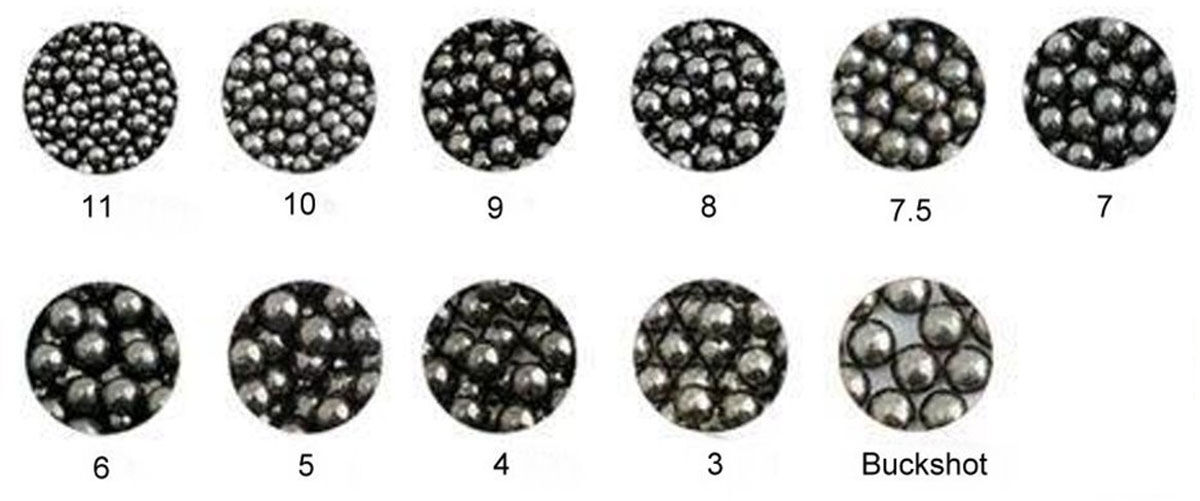
Pellet size matters. Pellet material matters. Pellet shape matters. A larger pellet generally retains velocity better than a smaller pellet of the same material because it has more mass relative to its frontal area. Likewise, a denser pellet can carry more mass than a less dense pellet of the same diameter. This helps explain why simply comparing the velocity printed on two boxes can be misleading.
Imagine a fast steel load and a slower load containing a denser shot material. The steel load may start with a significant velocity advantage, but because steel is considerably less dense than lead or bismuth, equal-size steel pellets carry less mass and shed velocity differently.
Starting faster doesn't necessarily mean arriving with the most useful energy. That's why experienced hunters consider shot material, pellet size, and velocity together rather than treating FPS as the only measure of performance.
Faster Loads Do Have Advantages
None of this means velocity isn't valuable. Increasing muzzle velocity increases the initial energy of an individual pellet. It also reduces flight time to the target—particularly at closer and intermediate distances. That can be beneficial in certain hunting situations.
Fast-crossing waterfowl, long sporting-clays presentations, and some upland situations can benefit from additional velocity. Higher launch velocities can also help compensate for the lower density of steel shot, which is one reason high-velocity loads became common in modern waterfowl ammunition.
But there's a point where chasing additional fps can begin producing tradeoffs elsewhere. And one of those tradeoffs is impossible for the shooter to ignore.

Velocity and Recoil Go Hand in Hand
There is no free velocity. Accelerating a payload faster requires energy, and increasing a given payload's velocity generally increases the recoil the shooter experiences. The relationship becomes especially noticeable when both payload weight and velocity increase.
Compare a moderate-velocity 1-ounce target load with a fast 1⅛-ounce load. The second shell isn't simply moving the shot faster; it is accelerating more shot to a higher velocity. The shooter ultimately feels the consequences. One heavy-recoiling shell may not matter much. Shoot 100 or 200 of them during a day of sporting clays, and the story can change considerably.
Recoil contributes to fatigue. Fatigue can affect concentration, gun mount, follow-through, and ultimately shooting performance. A load that theoretically reaches the target slightly faster doesn't provide much advantage if the shooter begins lifting his head or anticipating recoil halfway through the course.
That's why many experienced competitive shooters don't automatically reach for the fastest ammunition available. They look for the best balance of velocity, pattern quality, recoil, and consistency.
DID YOU KNOW? - A difference of 100 fps sounds substantial, but shotgun targets are normally measured in yards, not hundreds of yards. At typical wing shooting distances, increasing muzzle velocity does reduce time of flight—but often by less than shooters imagine.
The practical lesson isn't that velocity doesn't matter. It's that an extra 100 fps shouldn't replace proper lead, smooth gun movement, and good shooting fundamentals.
Can Higher Velocity Affect Patterns?
Potentially—and this is another reason velocity can't be considered in isolation. When a shotshell fires, the shot charge goes from stationary to well over 1,000 fps in an extremely short distance. That rapid acceleration subjects the pellets at the rear of the shot column to tremendous forces. This is often called setback.
Soft lead pellets can deform under these forces. Instead of remaining perfectly spherical, some pellets can flatten or become irregularly shaped. Why does that matter?
Round pellets generally fly more predictably through the air. Deformed pellets experience less-consistent aerodynamic forces and are more likely to migrate away from the center of the pattern. The result can be fewer pellets where you want them. This is one reason premium shotshell design involves considerably more than adding powder to increase velocity. Shot hardness, wad design, cushioning, propellant characteristics, and overall load engineering must work together.
A properly engineered higher-velocity load can pattern extremely well. But higher velocity by itself does not guarantee a better pattern. The patterning board gets the final vote.
Pellet Hardness Becomes Part of the Velocity Conversation
This is where antimony becomes particularly relevant in premium lead target ammunition. Pure lead is relatively soft. Adding antimony increases pellet hardness, helping pellets resist deformation during acceleration, passage through the barrel, and transition through the choke.
As velocity and acceleration increase, controlling pellet deformation becomes increasingly important. Harder, more spherical pellets tend to fly more predictably, which can help maintain pattern integrity at distance. That's one reason evaluating a premium target load solely by fps misses much of what you're paying for. Two shells may both leave the muzzle at 1,250 fps but produce noticeably different patterns because of the quality and hardness of their shot—and the engineering around it—differ.
Velocity tells you how fast the journey starts. It doesn't tell you how well the shot charge stays together along the way.

What Velocity Is Best for Sporting Clays?
There isn't one universally ideal velocity. For many sporting clays shooters, loads around 1,200 to 1,250 fps provide an excellent balance of target-breaking performance and manageable recoil. Some shooters prefer loads approaching 1,300 fps, particularly for certain presentations or because they simply shoot them well. Others intentionally choose softer-shooting ammunition because comfort and consistency across a long course matter more than maximum speed.
The important thing is consistency. If ammunition produces predictable velocity, reliable ignition, and uniform patterns, the shooter can develop confidence in what the load will do. And confidence matters enormously in clay shooting.
Changing between dramatically different velocities can alter perceived timing and lead, but constantly second-guessing ammunition usually creates a larger problem than the velocity difference itself. Find ammunition that patterns well through your shotgun, shoots comfortably, and performs consistently—and learn to trust it.
What Velocity Is Best for Upland Hunting?
Upland hunting introduces additional variables because the target is no longer a clay. For close-flushing quail, grouse, and early-season pheasants, extreme velocity is rarely necessary. Moderate-velocity loads can perform well while reducing recoil on days when hunters may walk miles between shooting opportunities.
As shot distances increase or game becomes larger, additional velocity can become useful—but pellet size and shot material become increasingly important as well.
Consider pheasant hunting. Increasing a #6 lead load from moderate to very high velocity doesn't change the fact that a #5 pellet carries more mass than a #6 pellet. For late-season roosters encountered at longer distances, choosing the appropriate pellet size may contribute more to downrange performance than simply selecting the fastest #6 load on the shelf.
The same principle applies throughout upland hunting: Choose the pellet first for the bird and expected distance. Then choose a well-engineered load that delivers that pellet at an appropriate velocity.
What About Waterfowl Loads?
Waterfowl ammunition offers one of the best examples of why you must consider velocity alongside shot material. Steel is significantly less dense than lead and bismuth. A steel pellet therefore weighs less than an equal-size lead or bismuth pellet.
Historically, ammunition manufacturers compensated for that difference by increasing pellet size and launch velocity. That's why waterfowl hunters commonly encounter steel loads advertised at velocities well above those typical of lead target ammunition.
Higher velocity can improve steel's initial performance, but it doesn't change the material's density. This is also why premium non-toxic materials such as bismuth can offer a different approach. Because bismuth is substantially denser than steel, hunters can achieve useful downrange performance without relying exclusively on extreme muzzle velocity.
Once again, fps is part of the equation—not the entire equation.
DID YOU KNOW? - Velocity alone doesn't determine how hard a shotgun pellet hits. Two pellets of identical diameter launched at identical velocity can carry different energy if they're made from materials of different densities. A denser pellet has more mass, and that additional mass affects its momentum, energy, and ability to retain velocity downrange. That's why you should always consider shot size + shot material + velocity together.

Why Consistent Velocity May Matter More Than Maximum Velocity
There's another velocity number that doesn't receive nearly as much attention as the one printed on the box: variation from shell to shell. Imagine shooting a round of sporting clays with ammunition averaging 1,250 fps. If every shell performs very close to that specification, the shooter receives predictable performance. Consistency is the objective.
Uniform propellant charges, reliable primers, consistent crimps, quality components, and precise manufacturing all help keep one shell performing like the next. The same principle matters in the field. Hunters want the first shell of the morning and the last shell of the afternoon to perform predictably. Premium ammunition isn't necessarily about producing the biggest velocity number on the shelf.
Often, it's about producing the same performance, shot after shot.
Don't Forget the Patterning Board
If you're trying to determine whether a faster load actually performs better in your shotgun, don't rely on the box. Pattern it.
Shoot your preferred ammunition through the shotgun and choke combination you actually intend to use. Test it at realistic distances. Look beyond the center of the pattern. Pay attention to overall pellet distribution, large gaps, and consistency between multiple shots. Then compare another load.
You may find the slower load produces a beautifully uniform pattern, while the faster load doesn't. Or your shotgun may strongly prefer the higher-velocity option. Shotguns can be surprisingly individual in what they shoot well. That's why the most meaningful performance test isn't conducted on the side panel of an ammunition box. It's conducted on paper.
So, Is Faster Shotgun Ammunition Better?
Sometimes. But not automatically. Velocity influences time of flight, initial pellet energy, and how a shotshell feels and performs. But increasing velocity can also increase recoil and place greater demands on the shot, wad, and overall load design.
The best shotshell isn't necessarily the fastest. It's the load that delivers the right pellet, in the right pattern, with sufficient downrange performance and manageable recoil for the intended application.
For a competitive shooter, that may mean choosing a moderate-velocity load that remains comfortable and consistent over hundreds of targets. For an upland hunter, it may mean prioritizing pellet size and pattern quality over another 100 fps. For a waterfowl hunter, it may mean balancing velocity against pellet density and selecting steel, bismuth, or another approved non-toxic material appropriate for the conditions. Ultimately, velocity is one number on the box.
Understanding what that number means—and what it doesn't—is what allows a shooter to choose ammunition based on performance rather than marketing.
Mach
Competition One
Heavy Pheasant
Dual Steel