If You Want More Broken Targets - Fewer Excuses - Start With The Right Load


Sporting clays is a game of consistency. Your mount, your lead, your timing – all matter. But one variable shooters often overlook is ammo selection. The right shell won’t fix poor fundamentals, but it will tighten your patterns, smooth recoil, and help you stay locked in over a full course.
The following breaks down exactly what to look for – and what to shoot – if you want to perform at your best.

What Makes a Great Sporting Clays Load?
At its core, the ‘best’ ammo for sporting clays comes down to pattern, efficiency, recoil management, and consistency.
Let’s start by breaking down the basics – shot size, velocity, and payload.
The three most prevalent shot sizes used in sporting clays are #7.5, #8, and #9 shot. Your decision to use one shot size over another will depend on your preference and application. Shot size plays a major role in how your pattern performs on different target presentations. #7.5 shot uses slightly larger pellets, which carry more energy downrange and perform better on longer, more distant targets; although you give up some pellet count in the process.
On the other end, #9 shot packs the highest number of pellets into each shell, creating very dense patterns that are ideal for close, fast-moving targets – but it’s less common in sporting clays due to its limited range. Sitting right in the middle is #8 shot, the most popular and versatile option. It offers an ideal balance of pellet density and retained energy, making it effective across the widest range of target distances and presentations.
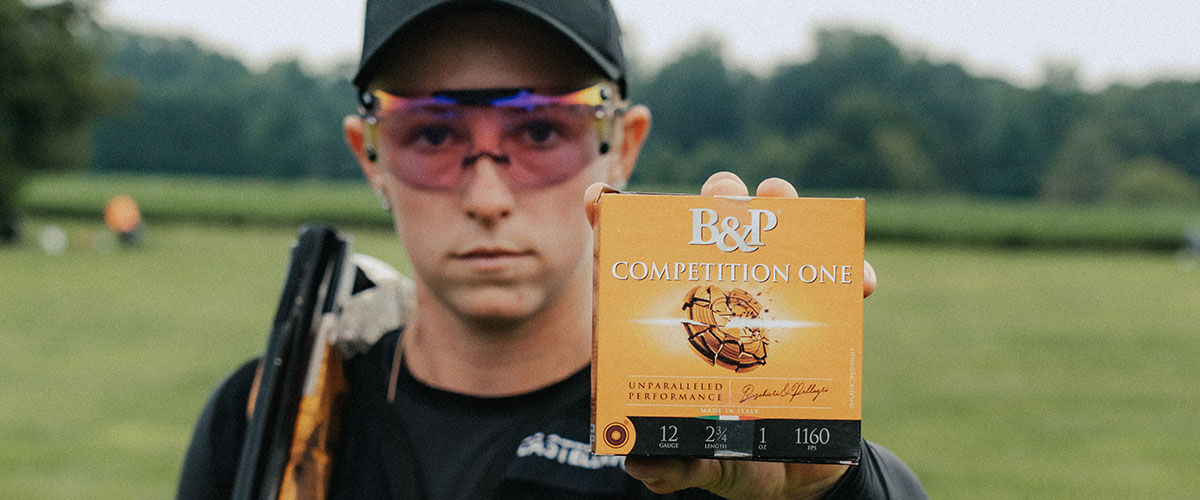
The Velocity Sweet Spot
Velocity influences both how quickly your shot reaches the target and how the gun feels over a full day of shooting. Loads around 1200 fps are known for their softer recoil, making them easier on the shoulder during long rounds or high-volume shooting days.
As you move toward 1300 fps, you gain a bit of speed, which can help with faster target engagement and slightly flatter shot travel – but you’ll also notice an increase in recoil. Most experienced shooters settle into a comfortable middle ground, typically choosing 1200-1250 fps for reduced fatigue, or 1250-1300 fps when they want a little more speed without sacrificing too much comfort.
Don’t Let the Weight Get You Down
Shot payload, or the weight of the shot charge, directly impacts both recoil and pattern density. A 1-ounce (oz) load is lighter recoiling and well-suited for high-volume shooting, making it a favorite among experienced shooters who prioritized control and endurance over the course of a long day.
In contrast, a 1-1/8 oz load delivers a denser pattern thanks to additional pellets, which can be more forgiving on slightly off-center hits. This added margin can be especially helpful for newer shooters or in more challenging target presentations. As a general recommendation, experienced shooters often prefer 1 oz loads for their reduced recoil, while 1-1/8 oz loads offer a bit more forgiveness when you want extra pattern density.

Consistency is King
The biggest separator between average ammo and premium ammo isn’t velocity – it’s consistency. When every shell performs the same, your leads stay predictable, your timing stays sharp, and your confidence builds with every station. That consistency comes from uniform powder charges, tight velocity spreads, and even shot distribution, all working together to deliver repeatable performance shot after shot.
Over the course of a full round – or a long tournament day – that reliability becomes a real advantage. Premium loads reduce variables, helping you stay focused on execution instead of adjusting to inconsistencies. It’s not just about breaking targets – it’s about breaking them the same way, every time.
The B&P Difference
Baschieri & Pellagri has built its reputation on precision manufacturing and competition-level performance – not just producing shotshells but engineering them to deliver the same results every time you pull the trigger. That commitment to consistency is rooted in tight quality control, carefully selected components, and a legacy of Italian craftsmanship that prioritizes performance over shortcuts. When you’re on the course, that translates into confidence – because your ammunition is one less variable you must think about.
One of the key differentiators is B&P’s proprietary Gordon System, an advanced basewad design that actively reduces felt recoil while improving ballistic consistency. Unlike traditional basewads, the Gordon System acts almost like a shock absorber, helping to manage pressure and smooth out the firing cycle. The result is a softer shooting experience without sacrificing performance – allowing you to stay comfortable, maintain focus, and shoot more consistently over long rounds or high-volume days.
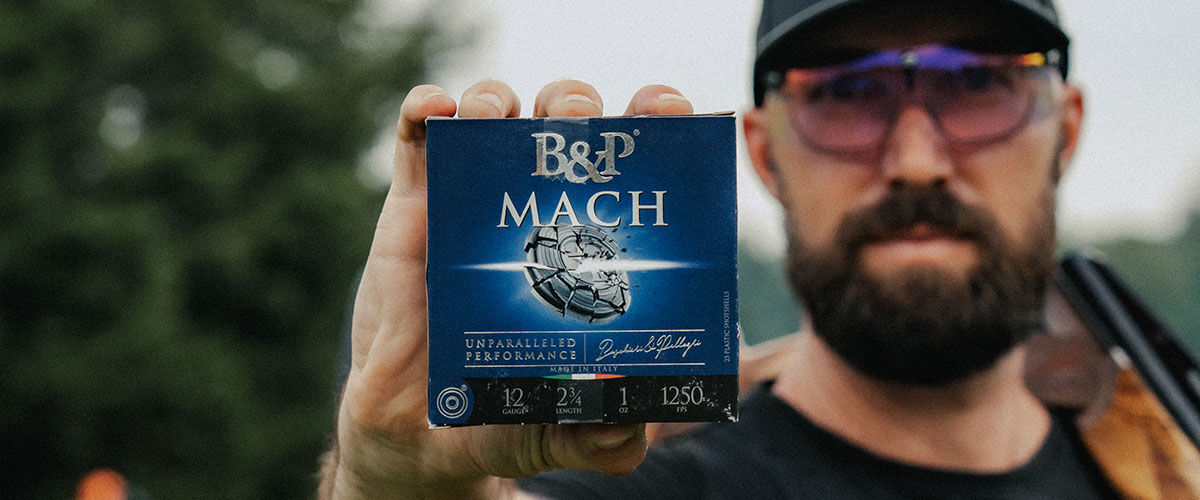
For sporting clays, that engineering advantage shows up where it matters most: smooth, consistent recoil profiles, tight and uniform patterns, and reliable ignition and cycling. Loads like Mach and Competition One are purpose-built for this level of performance, giving shooters the ability to stay locked into their rhythm and trust every shot. When your ammunition performs consistently, you’re free to focus entirely on execution – because at that point, it’s not about the gear anymore; it’s about breaking targets.
Competition
Sporting
Mach
Competition One